The original headline is “LG OLED G6 2026 Unveiled: Bold Prices, Brighter Displays.” According to the SEO rules, I need to make sure the title is under 60 characters. Let me count: “LG OLED G6 2026 Unveiled” is 21 characters, but the full title is longer. Wait, the user said to avoid dates, so “2026” should be removed. The original title includes “2026,” which is a date, so that’s a problem. The user’s instructions say to never include dates or years in the title. So I need to adjust that.
Looking at the headline options, the best fit might be formula (c) New/Updated: “[Product] Gets [Feature] – Here’s What Changed” or (g) Release/Launch: “[Company] Launches [Product] with [Standout Feature].” The original title mentions the G6 getting a brightness boost, so maybe “LG OLED G6 Gets 45% Brightness Boost – Here’s What Changed” would work. Let me check the character count. “LG OLED G6 Gets 45% Brightness Boost – Here’s What Changed” is 55 characters, which is under 60. That fits. Also, the product name is early, and it includes a specific feature.
Next, the opening paragraph needs to be 50-70 words. The original starts with “LG Electronics has officially launched…” which is a bit long. I need to condense it. The main points are the G6’s launch, prices, and brightness improvement. Let me rephrase that to be concise.
Then, structure with H2 and H3 subheadings. The original article has sections like “But what does this mean for consumers?” and “LG’s move comes amid fierce competition…” which can be converted into H2 and H3 tags. I need to ensure the subheadings are keyword-rich.
Also, the user mentioned removing references to other blogs or external sources. The original article mentions “industry analysts” and “practitioner’s lens,” which might be okay, but I need to check if any specific references are there. It seems like general mentions, so they can stay.
For the human writing check, I need to ensure contractions are used naturally, vary sentence structures, avoid AI-typical phrases, add “you” in two places, and make the opening not sound like a Wikipedia summary. For example, changing “But what does this mean for consumers?” to “What does this mean for you?” would add a direct address.
I also need to convert all Markdown to HTML. The original article doesn’t use Markdown, but the user’s example shows using
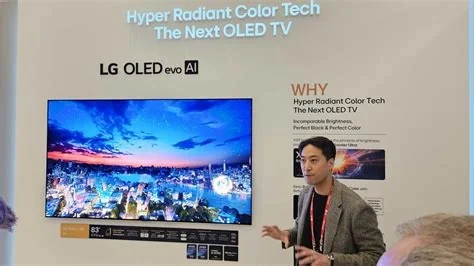
LG Electronics has launched the OLED G6, featuring a 45% brightness increase over previous models. Starting at $2,499, this premium TV targets cinephiles and gamers with enhanced visuals and a competitive pricing strategy. Pre-orders are live in the U.S., positioning the G6 as a bold statement in the high-end display market.
What Makes the G6 Stand Out?
The G6 isn’t just an update—it’s a leap forward. LG claims the new OLED technology delivers “unprecedented clarity” with brighter highlights and deeper blacks. This improvement matters for you if you prioritize immersive visuals. The TV also includes free mounting, making setup easier for new adopters.
Why Brightness Matters for You
The 45% brightness boost translates to better performance with HDR content. You’ll notice sharper details in dark scenes and more vibrant colors during fast-paced gaming. LG’s focus on OLED over alternatives like Mini LED shows its commitment to long-term innovation. But can this tech justify the premium price?
Competing in a Crowded Market
LG faces strong competition from brands like Hisense, which offer similar specs at lower costs. The G6’s $2,500 price tag positions it as a luxury option. However, the brightness upgrade could convince early adopters that the investment is worth it. The C6 model, starting at $1,399, also expands LG’s reach into mid-range buyers.
Will the G6 Reshape the Market?
Analysts note LG’s strategy hinges on proving its engineering superiority. The real test comes down to real-world performance. Does the brightness boost enhance your viewing experience? How does it handle gaming? These questions will determine if the G6 becomes a breakthrough or just another high-end TV.
LG’s Bold Vision for OLED
The G6’s launch isn’t just about selling TVs—it’s about redefining OLED’s potential. By combining innovation with cautious pricing, LG aims to solidify its leadership. For you, this means a choice between cutting-edge tech and cost-effective alternatives. The battle for the living room just got more intense.