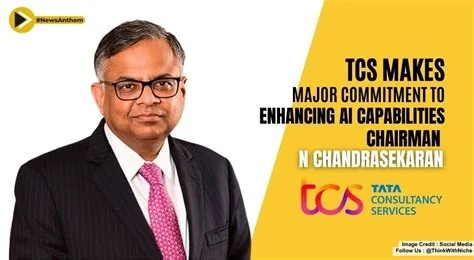
Tata Sons chairman N Chandrasekaran has taken the helm of Tata Consultancy Services’ AI push, steering the firm through a rapid transformation that blends aggressive talent upskilling, strategic acquisitions, and internal GenAI projects. His hands‑on approach aims to lock in AI revenue streams while delivering faster, cost‑effective solutions for clients worldwide.
Why Chandrasekaran Is Driving AI at TCS
Chandrasekaran sees AI as the core engine for TCS’s next growth phase. By moving into the “driver’s seat,” he can align the company’s massive resources with the fast‑moving demands of generative AI, ensuring that internal experiments become market‑ready offerings.
Strategic Upskilling and Talent Development
The chairman has launched an intensive upskilling program that targets every level of the organization. Employees are encouraged to earn AI certifications, experiment with real‑world use cases, and share learnings across business units. This approach not only deepens expertise but also creates a culture where you can see AI solutions emerging daily.
Acquisition Strategy to Fill Capability Gaps
TCS is actively scouting AI‑focused startups that can plug technology gaps quickly. These acquisitions are expected to bring niche talent, proprietary models, and ready‑to‑deploy tools, accelerating the firm’s ability to serve complex client demands.
Impact on Clients and Market
Standardizing AI delivery across the Tata ecosystem enables TCS to offer faster, more affordable solutions. Clients benefit from reusable models that have already been tested in real‑world scenarios, shortening time‑to‑value.
Hyper‑Affordable AI Models
One focus area is the development of low‑cost, high‑performance AI models designed for midsize enterprises. By leveraging economies of scale, TCS can provide you with solutions that keep budgets in check while maintaining competitive accuracy.
Competitive Landscape
Chandrasekaran’s playbook may set a new benchmark for Indian IT firms. Rivals will likely feel pressure to double down on their own AI investments, or risk falling behind as TCS expands its AI‑centric service portfolio.
Challenges Ahead
Scaling AI talent across a workforce of over 600,000 employees is a formidable task. Balancing deep research with broad deployment, and integrating acquired startups without cultural friction, will test the company’s execution capabilities.
Scaling Talent Across 600,000 Employees
- Ensuring consistent training quality across geographies.
- Maintaining a pipeline of advanced AI researchers while upskilling general staff.
- Measuring impact of AI initiatives on business outcomes.
Integrating Acquired Startups
- Aligning governance frameworks and security standards.
- Preserving innovative cultures while fitting into TCS’s processes.
- Realizing synergies without disrupting existing client engagements.
What This Means for You
If TCS succeeds, you can expect faster rollout of AI solutions, lower costs, and access to cutting‑edge models that were previously reserved for large enterprises. The company’s aggressive stance signals that AI will become a standard part of its service offering, shaping how you approach digital transformation.