Optum’s new AI‑driven prior‑authorization suite instantly cuts paperwork, speeds approvals, and eases the admin load for clinicians. By embedding smart automation into electronic health records, the tools let you get decisions in minutes instead of days, while keeping compliance intact. The result is fewer phone calls, less fax traffic, and faster patient care.
Digital Auth Complete Embeds AI Directly Into EHRs
Digital Auth Complete works inside the clinician’s workflow, spotting orders that need prior‑auth and pulling the right coverage details without you having to hunt for them.
Key Features
- Automatic order detection – the system flags every request that triggers a prior‑auth rule.
- Real‑time coverage lookup – it pulls payer information instantly, so you never waste time confirming benefits.
- Document aggregation – relevant clinical notes and lab results are gathered automatically.
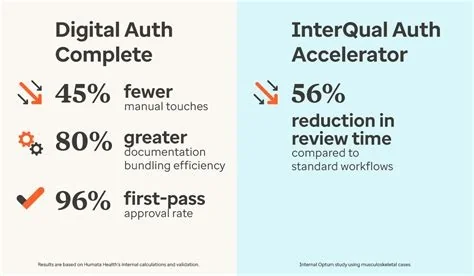
- Broad payer connectivity – integrates with over 250 networks, reducing manual touches by roughly 45%.
Early adopters report an 80% boost in processing efficiency and a 96% first‑pass approval rate, meaning most requests clear without a second review.
InterQual Auth Accelerator Accelerates Review Decisions
InterQual Auth Accelerator pairs Optum’s long‑standing clinical guidelines with AI models that compare each submission against the latest coverage policies.
Performance Highlights
- 56% faster review times compared with traditional manual workflows.
- Customizable automation levels – you choose how much AI assistance you want, keeping compliance under control.
- No auto‑denials – the tool only surfaces evidence; final decisions stay with human reviewers.
The AI highlights the most relevant evidence, so reviewers spend less time searching and more time confirming appropriate care.
Why It Matters for Payers, Providers, and Patients
From a payer perspective, the suite helps meet interoperability mandates and slashes the operational costs tied to manual reviews. For providers, the reduction in phone calls and faxed forms translates into more time for direct patient interaction. Patients benefit from quicker approvals, meaning they wait less for needed treatments.
Implementation Hurdles and Future Outlook
Integrating with diverse EHR platforms and keeping AI models up‑to‑date with evolving coverage rules can be complex. Nevertheless, the early metrics—45% fewer manual touches, 80% efficiency gains, and a 96% first‑pass approval rate—show the technology is delivering real value.
If you’re considering adopting AI‑enabled prior‑auth tools, focus on phased rollouts, continuous training for staff, and close collaboration with payer networks to ensure smooth data exchange.