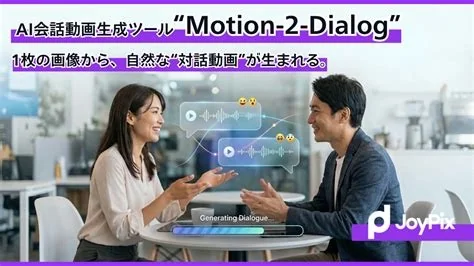
JoyPix has rolled out a corporate‑grade API that lets you embed its Motion‑2 and Motion‑2‑Dialog lip‑sync models directly into your apps, platforms, or customer‑facing services. The new interface automates video creation, supports Japanese phonetics, and scales on demand, making high‑quality, natural‑looking mouth movements accessible to marketers, educators, and developers alike.
Key Features of the Motion‑2 API
Japanese‑Focused Lip Dynamics
- Trained on a dataset tuned to Japanese phonetics, the models avoid the stiff, unnatural mouth shapes common in generic solutions.
- Fine‑grained control over visemes ensures speech looks authentic, even with rapid dialogue.
Multi‑Entity and Dialogue Support
- Handles single faces, animal avatars, and dual‑character scenes in the same request.
- Enables simultaneous lip‑sync for two speakers, opening possibilities for interactive tutoring or live‑stream hosts.
Resolution and Length Flexibility
- Choose output at 480 p or 720 p to match your bandwidth or quality requirements.
- Generate videos up to ten minutes per call, giving you room for longer presentations or tutorials.
Scalable Pay‑As‑You‑Go Pricing
- Discounted rates compared with the browser version keep costs predictable.
- The usage‑based model fits startups testing the tech and enterprises producing large volumes of content.
Why the API Matters for Your Business
Enterprises have struggled with generic lip‑sync tools that produce jarring artifacts in Japanese, forcing teams to spend hours on manual cleanup. JoyPix’s API eliminates that bottleneck, letting you launch localized video campaigns faster and at lower cost. If you need to produce thousands of short explainer clips or real‑time avatar interactions, this solution bridges the gap between research‑grade models and production‑ready pipelines.
Real‑World Use Cases
Yuki Tanaka, senior engineer at a Tokyo e‑learning startup, says, “We’ve been prototyping AI tutors for months, but the lip‑sync quality always fell short. The Motion‑2‑Dialog API’s Japanese‑specific tuning makes our avatars sound and look like they’re really speaking. Plus, the pay‑per‑use model lets us budget for seasonal spikes without over‑committing.”
Getting Started with the JoyPix API
To begin, visit JoyPix’s website, sign up for an API key, and follow the quick‑start guide. Sample code in Python and JavaScript is provided, and the documentation walks you through authentication, request formatting, and error handling. Once you’re set up, you can integrate lip‑sync generation into your existing workflows and start scaling immediately.