
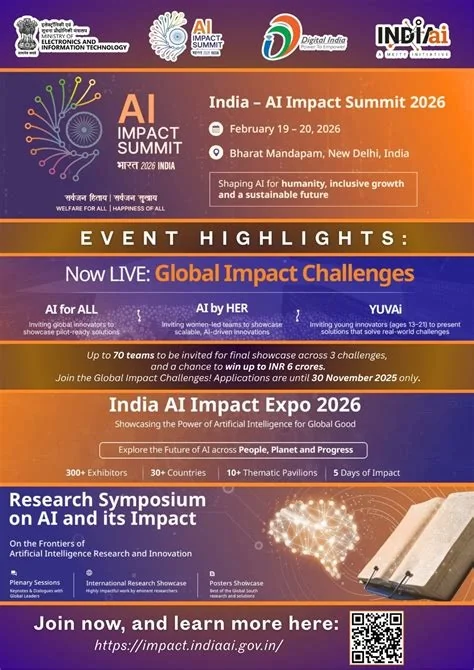
The India AI Impact Summit turned Bharat Mandapam into a bustling hub of AI innovation, drawing over 250,000 visitors and showcasing a roadmap for sovereign AI, job‑future security, and nationwide upskilling. Prime Minister Narendra Modi emphasized that preparation, not fear, will shape the country’s AI‑driven economy, and he unveiled a sweeping reskilling program aimed at millions of workers.
Key Announcements from the Summit
During the five‑day event, officials highlighted three strategic pillars—sovereignty, inclusivity, and innovation—to position India among the top global AI powers. The agenda featured international collaborations, cutting‑edge robot demonstrations, and a clear call to action for policymakers, educators, and industry leaders.
Sovereign AI Strategy
Modi stressed that home‑grown AI models will power services in native languages, reducing reliance on foreign technology. The government plans to:
- Develop AI frameworks that understand regional data nuances.
- Export AI solutions to serve billions worldwide.
- Embed local languages across digital platforms to boost accessibility.
Massive Upskilling Initiative
The newly announced upskilling drive targets workers across urban and rural areas. You’ll find training modules that blend online courses with hands‑on labs, and you can expect certification pathways that align with industry demand. Core components include:
- Accelerated curricula for data science, machine learning, and AI ethics.
- Partnerships with tech firms to provide apprenticeship slots.
- Regional training centers equipped with state‑of‑the‑art labs.
Industry Perspectives
Leaders from startups and established firms echoed the summit’s optimism. A senior AI lead at a Delhi fintech startup noted that sovereign AI is more than a buzzword—it’s a practical approach to capture local market nuances. Hiring for AI roles is climbing at roughly 30 percent annually, yet the talent pipeline remains thin, making government‑backed reskilling essential.
Challenges and Next Steps
Despite the enthusiasm, rapid AI deployment could outpace training programs, leaving pockets of workers vulnerable. The summit’s inclusive AI promise hinges on how quickly curricula, certification schemes, and funding reach smaller towns and under‑represented groups. Logistical hurdles, such as city traffic and security coordination, also reminded organizers that high‑tech events still depend on everyday infrastructure.
In the coming months, the true test will be whether India’s AI vision moves from conference floor to factories, offices, and villages. If the upskilling push delivers on its promise, you’ll see a new wave of AI‑enabled jobs that transform the economy while keeping workers at the center of progress.


