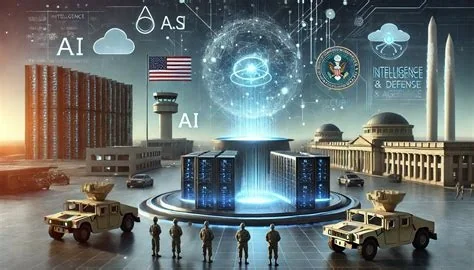
The U.S. military has tapped Anthropic’s Claude AI through Palantir’s data platform to support a high‑risk operation in Venezuela. By feeding real‑time intel into Claude, analysts generated language‑rich insights that helped shape mission planning and on‑the‑ground decisions. This marks one of the first visible cases of a commercial large‑language model being used in kinetic warfare, and it raises immediate compliance questions for you and the defense community.
Key Players and Their Roles
Anthropic and Claude
Anthropic markets Claude as a “safer” conversational AI, emphasizing alignment work and strict usage policies. The model excels at synthesizing disparate text sources, translating communications, and summarizing open‑source intel, which can accelerate decision‑making in fast‑moving environments.
Palantir’s Data Platform
Palantir provides the secure infrastructure that connects analysts to Claude. Its Gotham and Foundry suites enable data integration, audit trails, and access controls, making it easier for defense teams to embed AI outputs into operational pipelines while maintaining compliance.
Implications for Compliance and Security
Policy and Licensing Risks
Anthropic’s user agreement explicitly bans violent applications and weapons development. Deploying Claude in a kinetic mission appears to conflict with those terms, potentially exposing the company to legal challenges and prompting regulators to tighten AI licensing for defense customers.
Operational Risks of LLMs
Integrating a large‑language model into live operations introduces new threat vectors:
- Prompt injection attacks that could manipulate outputs.
- Hallucinated information that may mislead planners.
- Biases that could affect target selection.
Mitigating these risks requires sandboxed testing, human‑in‑the‑loop review, and robust validation layers before any AI‑generated insight informs kinetic decisions.
Practitioner Insights
A defense‑technology practitioner who works on AI integration notes that Claude “illustrates both the promise and the peril of plugging commercial LLMs into operational pipelines.” They stress that without rigorous governance, the lack of deterministic guarantees can jeopardize mission outcomes. You’ll want to enforce strict review processes whenever AI assists in critical tasks.
Future Outlook for AI in Defense
If the military continues to rely on commercial models, expect tighter contractual clauses, enhanced monitoring, and emerging “AI‑ready” procurement standards. Legislators are already flagging concerns about AI‑enabled warfare, and incidents like this could accelerate policy proposals that restrict certain AI capabilities for military use.
For AI companies, the episode serves as a cautionary tale: balancing widespread adoption with safeguards is essential to prevent misuse. The line between an assistive tool and a weapon component can blur quickly when a model is embedded in high‑stakes environments.