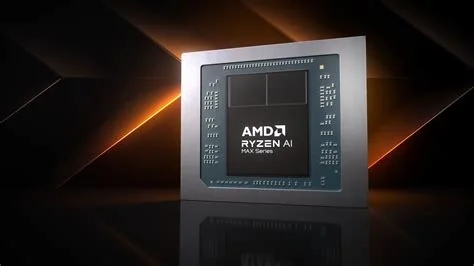
AMD posted its strongest fourth‑quarter ever—$10.3 billion revenue, 54 % GAAP margin, and $0.92 EPS—but the stock slumped 17 % the next day. The plunge wasn’t caused by weak results; it was driven by investors’ disappointment with modest guidance amid soaring AI expectations. In short, the market punished a cautious outlook despite record earnings.
Record Q4 Performance Highlights
AMD delivered $10.3 billion in revenue, the highest in its history, powered by demand for EPYC server processors and Radeon Instinct accelerators. GAAP gross margin reached 54 % (57 % non‑GAAP), while operating income climbed to $1.8 billion. Net income of $1.5 billion and earnings of $0.92 per share underscore a profitable, efficient quarter.
Why the Stock Fell 17% After Record Earnings
The market’s reaction hinged on guidance, not the numbers. Analysts expected a bold outlook for Q1 2026, anticipating that AI‑driven demand would accelerate even further. AMD’s press release offered a “steady‑state” forecast, which traders read as a warning sign. That mismatch between expectation and guidance sparked the sharp sell‑off.
Investor Expectations vs. Guidance
Investors were looking for a clear signal that AMD would capture a larger slice of the AI‑compute market. When the company hinted at modest growth, the sentiment shifted from optimism to caution, prompting a rapid reassessment of its valuation.
Market Sentiment and AI Hype
The AI sector has been priced for near‑perfect growth. Any hint of restraint—whether it’s a conservative forecast or a comment about supply constraints—can trigger a swift correction. You’ll often see sentiment swing dramatically when hype meets reality.
Implications for the AI Chip Market
AMD’s results prove that the competitive landscape remains dynamic. While Nvidia still leads, AMD’s record revenue shows it can secure a meaningful share of AI workloads, especially as data‑center operators diversify to mitigate risk.
AMD’s Competitive Position
With EPYC and Radeon Instinct chips delivering strong margins comparable to Nvidia, AMD is positioned as a viable alternative for customers seeking performance‑per‑watt efficiency. This strengthens its bargaining power in a market hungry for silicon.
Upcoming Products That Could Shift the Balance
The upcoming MI300X GPU, slated for early 2026, promises double‑digit performance gains over the current generation and directly targets Nvidia’s Hopper architecture. In parallel, the next‑gen EPYC “Genoa” processors aim for higher core counts and better power efficiency—features that data‑center operators value when scaling AI workloads.
What Investors Should Watch
- Guidance trends: Look for signals of accelerated AI demand in future forecasts.
- Product roll‑outs: Track the production ramp‑up of MI300X and Genoa chips.
- Market sentiment: Monitor how AI hype influences valuation swings.
- Competitive moves: Compare AMD’s margin trajectory against Nvidia’s latest results.