
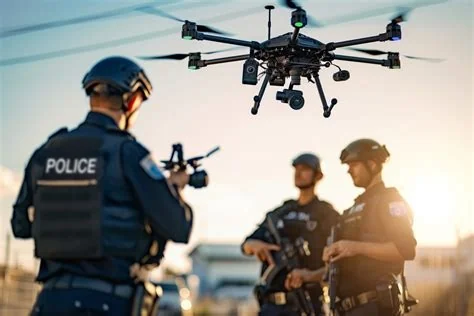
Police.AI is the United Kingdom’s largest national artificial‑intelligence surveillance programme, funded with £140 million to deploy live facial‑recognition (LFR) across public‑space cameras, expand AI analytics for CCTV, door‑bell and mobile‑phone footage, and introduce AI chat‑bots for non‑urgent police queries. The Home Secretary says the system will free the equivalent of six million police hours each year, boosting frontline presence.
What Police.AI Programme Includes
Live Facial‑Recognition Vans
The rollout will increase mobile LFR vans from ten to fifty, enabling forces to scan crowds in real time for wanted individuals. These vans integrate high‑resolution cameras with AI algorithms that match faces against national databases, providing instant alerts to officers on the ground.
AI‑Driven Analytics and Chat‑Bots
Beyond LFR, Police.AI will analyse CCTV, door‑bell and mobile‑phone footage using machine‑learning models to detect deep‑fakes, conduct digital forensics, and automate routine tasks such as form filling, redaction and transcription. A pilot AI chat‑bot already handles online queries, directing callers to the appropriate department and reducing manual workload.
Legislative and Organizational Context
National Police Service Vision
The programme forms part of a broader white‑paper proposing a National Police Service (NPS) model, consolidating the current 43 forces into up to 12 “mega‑forces” to tackle terrorism, fraud and organised crime more efficiently.
Officer Licensing and Oversight
The plan includes mandatory “licence to practice” renewals for officers and grants the Home Secretary authority to dismiss chief constables who under‑perform, aiming to raise accountability across the new structure.
Expected Benefits for Policing
Faster Investigations
AI‑driven surveillance can cross‑reference live video feeds with facial‑recognition databases within seconds, dramatically accelerating suspect identification compared with manual review.
Reduced Administrative Load
Automation of routine administrative work is projected to free six million officer hours annually, allowing more personnel to focus on patrols, community policing and proactive crime prevention.
Privacy and Civil‑Rights Concerns
Surveillance Scope
Critics warn that the programme creates near‑constant AI surveillance across England and Wales, with predictive analytics that could flag individuals before any crime occurs, raising significant civil‑rights questions.
Bias and Data Sharing Risks
Live facial‑recognition has shown higher false‑positive rates for Black and minority ethnic people, increasing the risk of wrongful identification. Additionally, private companies will have access to collected biometric data, prompting calls for stronger statutory safeguards.
Technical and Security Challenges
Algorithmic Bias and Hallucinations
Instances of AI “hallucinations” have already influenced policing decisions, highlighting the need for rigorous validation and oversight of algorithmic outputs.
Cybersecurity Risks
Continuous data ingestion from public cameras and personal devices expands the attack surface, making robust security measures essential to protect sensitive biometric information from breaches.
International Perspective
The UK joins a limited group of nations implementing nationwide live facial‑recognition. While some cities in the United States and China have integrated similar technologies, the UK’s centralized “Police.AI” hub and scale of investment make its approach uniquely ambitious.
Looking Ahead
Phased deployment of LFR vans and AI analytics platforms will begin later this year, with full national coverage targeted for the near future. Ongoing oversight by the Biometrics Commissioner and parliamentary scrutiny will be crucial to balance security benefits with privacy protections and maintain public confidence.


