
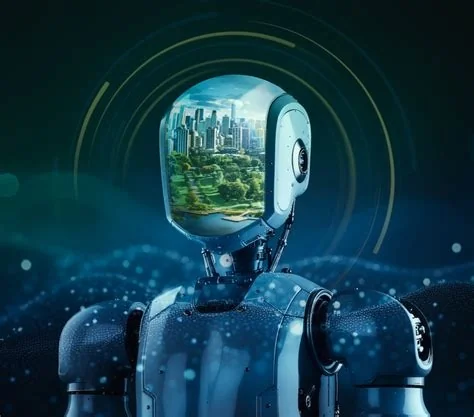
Physical AI combines real‑world perception, decision‑making and actuation into a single loop, enabling industrial robots to operate autonomously in unstructured environments. By grounding artificial intelligence in tangible sensor data and physical interaction, manufacturers can achieve higher productivity, faster re‑tooling, and more reliable quality control across a wide range of production lines.
What Physical AI Means for Robots
Physical AI embeds perception, decision‑making and actuation together, allowing robots to sense material conditions, process data on the spot, and adjust movements in real time. This integration transforms robots from simple repeaters of pre‑programmed commands into machines that can manipulate objects with human‑like dexterity while continuously learning from their surroundings.
From Rule‑Based to Context‑Aware Machines
Traditional robots rely on fixed rule‑based logic. Physical AI pushes them into a context‑aware tier, where they interpret dynamic conditions and adapt their behavior without explicit re‑programming. This shift turns robots into collaborative agents capable of handling new tasks, responding to unexpected events, and working safely alongside human operators.
Industry Demonstrations and Datasets
Recent industry showcases highlighted AI‑driven robots that interact directly with the material world. Leading technology firms unveiled open datasets that combine synchronized video, lidar and force‑torque measurements from real manufacturing cells. These benchmarks accelerate research and enable developers to train and evaluate perception‑driven robotic control models at scale.
Key Technological Advances
- One‑shot and zero‑shot learning – Robots can generalise a task from a single demonstration or infer how to perform a task without direct examples, dramatically reducing re‑training time for new production lines.
- Reinforcement and imitation learning – Reinforcement learning rewards successful actions, while imitation learning lets robots copy human operators through tele‑operation, physical guidance or video observation.
- Large language models for robot control – LLMs translate natural‑language instructions into low‑level motion commands, bridging human intent and machine execution.
- Agentic capabilities – Emerging agentic robots can act independently, improve their performance over time, and support automation across manufacturing, healthcare and consumer services.
Industrial Impact and Adoption
Global robot deployments now exceed several million units, with annual growth rates outpacing previous decades. Physical AI extends the functional lifespan of existing hardware by adding perception modules that enable real‑time feedback, such as dynamic torque adjustment and anomaly detection. Major robotics divisions emphasize that retrofitting legacy robots with AI perception can unlock new capabilities without costly equipment replacement, fostering smarter factories where robots collaborate with humans and each other.
Challenges and Readiness
Widespread deployment depends on robust data pipelines, safety certifications and standardized human‑robot interaction protocols. Open datasets help address data scarcity, but manufacturers must still validate models against specific tolerances and regulatory requirements. Building reliable, secure pipelines and achieving industry‑wide safety standards are essential steps toward full-scale adoption.
Future Outlook
Physical AI is set to transform industrial robotics from isolated, repetitive tools into adaptable, collaborative partners. By grounding AI in real‑world perception and actuation, manufacturers can expect higher productivity, reduced downtime and rapid reconfiguration of production lines with minimal re‑programming. As hardware makers, AI researchers and standards bodies converge around shared datasets and safety frameworks, the next wave of factory automation will arrive faster than ever before.


