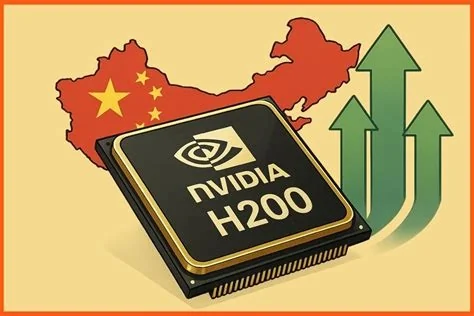
Beijing has given a clear signal that China’s leading internet and cloud platforms should prepare to place orders for Nvidia’s H200 AI accelerator. The guidance lifts a short‑term pause, opens a quota‑based pathway for large‑scale purchases, and highlights the balance between accessing world‑leading AI silicon and advancing China’s semiconductor self‑sufficiency.
Guidance Overview for Nvidia H200 Orders
Regulators have instructed Alibaba, Tencent, ByteDance and other top Chinese tech firms to develop purchase plans for the H200, Nvidia’s flagship AI processor. The directive is an invitation to ready orders pending final approval and compliance with export‑control requirements. An initial reference batch of roughly 40 units is expected for early shipments.
Projected Demand and Quota Framework
- Companies are considering orders exceeding 2 million H200 chips for upcoming delivery cycles.
- Alibaba and ByteDance each target more than 200,000 units.
- The quota system will define batch sizes and timing for the first shipments.
From Pause to Approval: Policy Shift Explained
Earlier in the month, Chinese authorities temporarily halted new H200 orders to encourage domestic chip development. Within weeks, officials granted in‑principle approval for firms to resume preparation, reflecting a pragmatic response to the urgent need for cutting‑edge AI hardware.
Balancing Export Controls and Domestic Ambitions
The H200 remains subject to U.S. export restrictions, which increase costs and licensing complexity for Chinese buyers. While China invests heavily in homegrown alternatives such as Huawei’s Ascend line, current domestic silicon does not yet match the performance required for large generative‑AI models. The new guidance may include conditions for purchasing a portion of domestic chips alongside imported H200 units.
Market Impact and Strategic Implications
Nvidia’s share price responded positively to the news, indicating investor confidence that Chinese hyperscalers could generate a new wave of demand. Access to the H200 will accelerate AI model training for e‑commerce recommendation engines, short‑video platforms, and cloud AI services, potentially reshaping the global AI hardware landscape.
Long‑Term Outlook for China’s Semiconductor Strategy
- Negotiations will continue among Nvidia, Chinese firms, and export‑control authorities in Washington and Beijing.
- If quota and domestic‑chip conditions are finalized, the first H200 accelerators could arrive by mid‑2026.
- The episode serves as a barometer for future technology transfers and may influence how multinational chipmakers design supply chains amid geopolitical fragmentation.