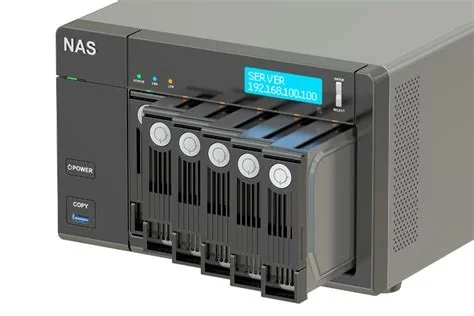
Network‑Attached Storage (NAS) is rapidly becoming the go‑to solution for both enterprises and households seeking affordable, scalable, and easy‑to‑manage storage. Its appeal lies in low entry cost, modular expandability, high‑speed connectivity, intuitive management tools, and built‑in redundancy that together deliver continuous data access without the complexity of traditional file servers.
Why NAS Is Gaining Traction
NAS provides a straightforward way to create shared storage environments without the overhead of full‑blown server infrastructure. Organizations appreciate the reduced capital expenditure and faster deployment, while home users are attracted by the ability to store large media libraries locally and avoid recurring cloud fees. The combination of cost efficiency, extensibility, and operational simplicity drives its growing popularity.
Selection Criteria for NAS Devices
When choosing a NAS, focus on three core criteria that affect performance and future growth.
- Capacity and Expandability – Opt for models with multiple drive bays and hot‑swap capability to add storage as data needs increase.
- Performance and Connectivity – Gigabit Ethernet is the baseline; consider 2.5 GbE or 10 GbE models for high‑throughput applications such as video editing or virtualization.
- Ease of Management – Look for intuitive web interfaces, mobile apps, and automated backup features that lower the learning curve for both IT staff and casual users.
Comparing NAS to Traditional File Servers
Evaluate total cost of ownership, maintenance overhead, and redundancy options. Modern NAS units often match or exceed the reliability of legacy file servers while offering simpler scaling and lower power consumption.
Ensuring High Availability with Relay NAS
A practical redundancy method involves pairing two NAS units in a master‑slave configuration. If the primary unit fails, the secondary automatically assumes control, minimizing downtime without requiring expensive enterprise‑grade clustering solutions. This approach suits small‑to‑medium businesses that need reliable access but have limited budgets.
Plug‑and‑Play NAS for Consumers
New consumer‑focused NAS models emphasize effortless setup. Features such as one‑tap mobile pairing, NFC‑enabled connections, and automated network configuration allow users to get a functional storage hub in minutes, removing the perceived technical barrier and encouraging broader adoption among home users.
Impact on the Tech Landscape
The convergence of enterprise‑level reliability and consumer‑grade simplicity positions NAS as a unifying storage platform. Businesses benefit from reduced capital costs and faster rollouts, especially for remote or hybrid workforces. Households gain privacy‑preserving, on‑premises storage that eliminates ongoing cloud subscriptions. Ancillary markets—such as SSD upgrades, third‑party backup software, and higher‑speed networking gear—are also poised for growth.
Future Outlook
Beyond cost and convenience, the next wave of NAS adoption will hinge on integration with hybrid cloud strategies, data‑sovereignty compliance, and AI‑driven services like media indexing and encrypted sharing. As redundancy models like relay failover mature and plug‑and‑play devices maintain robust security, NAS is set to evolve from a backup tool into a central hub for edge computing workloads.