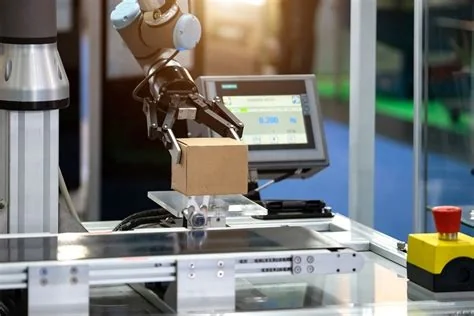
Japan’s Ministry of Economy, Trade and Industry (METI) warns that the nation will lack roughly 3.4 million AI and robotics workers by 2040. The shortfall spans specialized engineers, data scientists and on‑site technicians, prompting a new national AI‑Robotics plan aimed at aligning education, training and industry needs.
Projected AI & Robotics Talent Shortfall
Specialized vs On‑Site Workforce Gap
METI’s labour‑supply analysis estimates a need for 7.82 million specialized AI and robotics professionals, yet only about 57 % (≈4.43 million) are expected to be sourced domestically. In addition, an estimated 2.6 million on‑site workers for factories, construction sites and service environments remain unfilled, creating a combined deficit of over 3 million workers.
Regional Disparities in Talent Supply
The Kanto prefectures—Tokyo, Chiba, Saitama and Kanagawa—are projected to meet most of the specialized‑worker demand. Other regions face combined shortages, with the broader Kanto area experiencing the deepest deficit of roughly 890,000 workers, while the Chugoku region shows the smallest shortfall at about 30,000. To address these gaps, METI, MEXT and local governments will form a national council with ten regional hubs.
National AI‑Robotics Plan Overview
Service‑Robot Gap and Strategic Priorities
The plan targets Japan’s “service‑robot gap,” where domestic presence lags behind its dominance in industrial robots. Key priorities include evaluating demand‑side factors such as consumer acceptance and business investment, and supply‑side constraints like workforce readiness, semiconductor availability and AI‑training capacity.
Demographic Pressures and Economic Impact
Japan’s ageing population intensifies the urgency of automation in healthcare, senior‑care, logistics and retail. Service robots are positioned as a strategic response to labour shortages, but the projected talent deficit could hinder large‑scale deployments, affecting productivity and economic competitiveness.
Industry and Academic Response
Industry leaders acknowledge the talent shortfall and stress the need for clear business cases to drive adoption. Academic institutions are being urged to expand STEM curricula, create robotics apprenticeships and attract overseas expertise to fill immediate gaps.
Potential Economic Implications
- Reduced competitiveness in emerging AI‑driven markets.
- Slower automation in sectors most affected by demographic decline, raising operational costs.
- Higher unemployment among graduates from non‑technical fields due to a surplus of clerical positions.
Conversely, successful execution of the plan could reinforce Japan’s reputation as a robotics powerhouse and mitigate labour pressures from an ageing society.
Next Steps for Closing the Gap
Regional councils will draft localized talent‑development roadmaps while METI finalises the comprehensive AI‑Robotics policy. Stakeholders—from multinational manufacturers to start‑ups—will monitor progress to see if Japan can translate its engineering heritage into a sustainable, AI‑enabled workforce.