
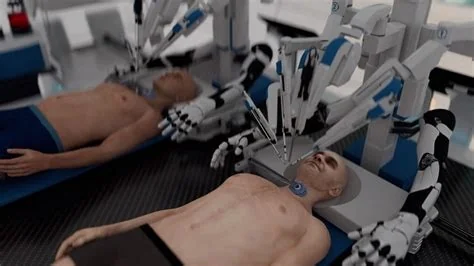
An AI‑driven robotic platform is being designed to perform whole‑head transplantation, offering a potential last‑resort therapy for terminal cancers and advanced neurodegenerative diseases. Leveraging artificial kinaesthesia, single‑port robotics, and fully integrated surgical suites, the system aims to achieve sub‑millimeter precision and autonomous force control, reducing human error and expanding treatment options.
Artificial Kinaesthesia Powers Precise Tissue Manipulation
The core innovation lies in artificial kinaesthesia, which equips the robot with a sense of force, tension, and tactile feedback comparable to a human surgeon’s proprioception. By integrating e‑skin pressure sensors, laser‑profiled continuum actuators, and real‑time physics‑driven neural networks, the platform can predict soft‑tissue deformation and adjust its movements instantly.
Sensor‑to‑Algorithm Pipeline
A hierarchical pipeline transforms raw sensor data into actionable control signals. High‑resolution pressure maps feed into graph‑based neural models that estimate tissue stiffness, while closed‑loop controllers modulate grip force to stay within safe thresholds, ensuring delicate structures such as blood vessels and nerves are handled without damage.
Single‑Port Robotics Enables Access to Cervical Spine and Cranial Base
Advances in single‑port, transoral robotic instruments provide the narrow access routes required for head‑neck procedures. Compact, multi‑degree‑of‑freedom arms can navigate the confined anatomy of the cervical spine and cranial base, delivering the precision needed to detach and re‑attach vascular and neural connections during a transplant.
Integrated Surgical Suites Provide End‑to‑End Workflow
Modern surgical suites combine pre‑operative planning, intra‑operative navigation, and postoperative assessment into a unified digital environment. By embedding the AI‑driven robot within this ecosystem, surgeons benefit from digital twins of patient anatomy, real‑time imaging overlays, and autonomous decision support that streamline each phase of the complex transplant procedure.
Market Momentum and Clinical Adoption
- AI‑assisted surgery platforms are projected to exceed $50 billion in market value within the next decade, driven by rapid adoption across specialties.
- Leading manufacturers are embedding machine‑learning modules for video analytics, tissue segmentation, and automated suturing, creating a robust foundation for autonomous head‑transplant technology.
- High‑volume robotic surgery centers have demonstrated safety and efficiency at scale, providing valuable data pipelines and safety protocols for future ultra‑complex applications.
Implications and Challenges for Autonomous Head Transplant
If realized, an autonomous head‑transplant robot could transform treatment for inoperable brain tumors and end‑stage neurodegenerative conditions such as ALS. The system must consistently achieve sub‑millimeter accuracy and precise force modulation to reconnect vascular, neural, and musculoskeletal structures without irreversible injury. Major hurdles remain, including rigorous validation across diverse tissue types, regulatory approval for high‑autonomy devices, and ethical considerations surrounding accountability and data privacy.
Next Steps Toward Clinical Reality
The development team plans to prototype a modular “head‑attachment” robot that integrates advanced navigation stacks with artificial kinaesthetic sensors. Bench‑top trials are scheduled for the near term, followed by pre‑clinical animal studies. Success will depend on cross‑disciplinary collaboration among bioengineers, neurosurgeons, and AI ethicists, as well as the establishment of regulatory pathways that accommodate unprecedented levels of machine autonomy in the operating room.


