Instacart Unveils Smart Carts Powered by NVIDIA
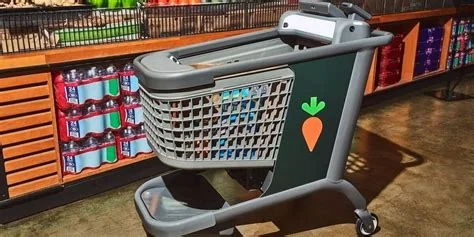
Remember the digital divide? It’s closing, and it’s carrying groceries down the aisle. Instacart has officially stepped into the ring, introducing its “Physical AI” vision for the grocery store, powered by NVIDIA Jetson. It’s not just a smart cart anymore; it’s a shopping assistant that lives on wheels, ready to influence your basket the second you pick it up.
When a retailer deploys a Caper Cart, they aren’t just capturing data—they are processing what’s happening in the aisle in real time, right there on the cart itself. This is the core of the Physical AI concept: intelligence that perceives and responds to the physical world directly at the point of interaction. According to Instacart, this means capturing basket contents and precise location data without waiting for a checkout line.
How It Works: On-Device Processing
The tech stack is impressive, utilizing sensor fusion to combine basket-facing cameras, a certified scale, and location-tracking systems. Everything is processed on-device, meaning the heavy lifting happens right there on the cart, not in the cloud. As Chief Connected Stores Officer David McIntosh explained, getting all these signals right, in real-time, is what enables relevant and timely influence. It’s a continuous learning system powered by real-world data, built to handle the messiness of a brick-and-mortar store—from inconsistent Wi-Fi to shelves changing in real-time.
Why It Matters: Basket Size and Retail Media
But why does this matter? For retailers, the numbers are already moving. Instacart claims a nearly 1% lift in basket size when the system prompts, “Got everything you need?” That might sound small, but in high-volume retail, it’s significant. It drives larger baskets, boosts retail media revenue, and helps reduce shrink and out-of-stocks. For the shopper, it promises relevant recommendations and a more intuitive experience.
Connecting Physical and Digital Worlds
This creates a bridge between the physical and digital worlds. The in-store activity is then connected to retailers’ e-commerce systems, giving brands a complete view of how customers shop across both physical stores and online. We are seeing a shift where the cart isn’t just a receptacle for groceries, but a gateway to a more connected retail ecosystem.