Artificial intelligence is moving fast, and it’s not just about smarter code anymore. We’re seeing a massive shift where specialized hardware meets advanced AI, fundamentally changing how we work and heal. From Butterfly Network’s FDA-cleared ultrasound tools to Google DeepMind’s humanoid robots, the landscape is transforming right before our eyes.
Democratizing Healthcare with Butterfly Network
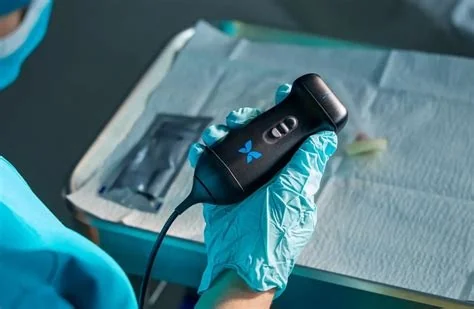
You’ve probably seen how complicated and expensive ultrasound machines are, needing a specialist just to run them. Butterfly Network is flipping that script. They’ve secured FDA clearance for a Gestational Age tool integrated into their handheld, semiconductor-based devices. This is the first “blind-sweep” ultrasound AI tool, meaning a nurse or technician can use it without a sonographer to manipulate the probe or interpret complex images.
- The Reach: The tool is already deployed in Malawi and Uganda, backed by the Gates Foundation, but it’s expanding to the U.S. market.
- The Tech: It operates between weeks 16 and 37 of pregnancy, delivering results comparable to a human expert.
- The Scale: Deep learning training utilized over 21 million images to ensure the results are solid.
Robotics on the Edge: DeepMind Meets Agile Robots
It’s not just about healthcare; AI is redefining the physical world, too. Google DeepMind is partnering with Agile Robots to build humanoids that aren’t just wrapping existing tech in a tin can. They are upgrading the hardware itself to create platforms meant for a real workforce, capable of handling heavy lifting and performing tasks in a production environment, not just a lab.
Real-World Governance Challenges
Despite all this excitement, a recent Pulse article highlights a quiet reality. Only 21% of companies have a mature governance model for autonomous AI agents, even though 74% plan to deploy them within two years. We are rushing to build these powerful new tools without always asking if the infrastructure underneath has matured enough to support them. It’s a classic adoption gap, and it’s something you need to watch if you’re working in enterprise tech.
Google’s Rapid-Fire AI Evolution
Google has been releasing updates at a breakneck pace, blurring the lines between simple search engines and complex, multimodal systems. We’ve seen the Gemini 3.1 Flash for low-latency audio, the Lyria 3 Pro for music composition, and the Gemini 3 Deep Think for complex reasoning. The goal isn’t just speed; it’s about creating systems that can “think” in ways we used to think only humans could, bridging visual reasoning with code execution.
Practitioners Perspective
For those of you in the field, these advancements mean the tools are getting smarter, but the training is often playing catch-up. The Butterfly ultrasound is a prime example: it effectively “de-skills” the diagnostic process, allowing a nurse to get a result formerly reserved for a specialist. That’s powerful, but it requires a new kind of training for clinicians. They need to trust the algorithm, not just the manual. Similarly, for engineers, the speed of iteration is exciting, but it’s risky if we don’t have the governance to match it.