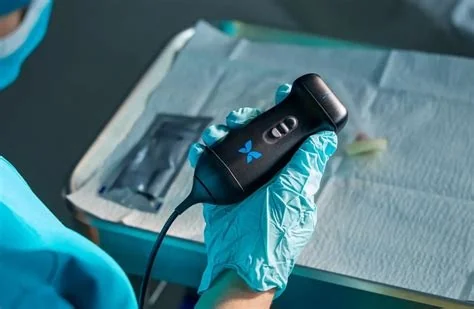
Butterfly Network Launches First FDA-Cleared AI Gestational Age Tool
Artificial intelligence is finally getting a stamp of approval from the FDA, and this one’s a game-changer for maternal health. Butterfly Network has secured clearance for its blind-sweep ultrasound tool, the first of its kind to get the green light. This AI-powered Gestational Age (GA) estimator is designed to instantly tell a clinician how far along a pregnancy is, removing the need for a highly trained sonographer to manually measure every curve of the fetus.
According to the company, this represents a major stride for women’s health, particularly in the areas where access to specialized imaging is scarce. This isn’t just a software update; it’s a potential tool that aims to close a dangerous gap in prenatal care. It’s a solution designed to minimize user variability, ensuring that accurate gestational age assessment is no longer a barrier to treatment.
The Challenge of Maternal Care Gaps
Let’s talk about the problem. Accurate gestational age assessment is critical, yet it remains a significant gap in maternal care worldwide. In the U.S., nearly half of rural counties lack dedicated obstetric services. That’s a lot of potential patients who are miles away from the care they need. Globally, the statistics are even starker—nearly 92% of maternal and neonatal deaths occur in low- and middle-income countries. So, what’s the solution? Early intervention. Earlier identification of potential complications allows clinicians to time key prenatal screenings and guide necessary interventions.
How Butterfly’s AI Sweeps Work
Butterfly’s new GA Tool builds on deep-learning models developed by Jeffrey Stringer, MD, and his team at the University of North Carolina at Chapel Hill. The technology uses a blind-sweep method to deliver a reliable estimate in under two minutes. It doesn’t just sit there, waiting for a perfect image; it uses a fully automated, three-step process to get the job done: enter fundal height, apply gel, and perform guided sweeps.
You might wonder, how does it actually work? The AI is trained on over 21 million images across diverse patient demographics and care settings. This massive dataset allows the model to deliver consistent results for patients between 16-37 weeks that are essentially equivalent to those done by a human sonographer performing biometry-based measurements.
Why Practitioners Are Excited
For a physician working in a busy clinic or a remote field hospital, this kind of tool is a lifeline. You don’t always have the luxury of sending a patient to a specialist for a precise measurement. You need answers now, and you need them accurate. This solution provides a consistent, reliable estimate when the alternative might be guessing—guessing that could cost a mother her life or a baby their future. It bridges the gap when you don’t have a sonographer in the room, ensuring that a patient’s care isn’t delayed simply because of a shortage of skilled personnel. It’s not replacing the clinician, but it’s giving them a much sharper instrument to work with.
“Improving maternal health outcomes and expanding access to prenatal imaging has become an urgent priority,” said Sachita Shah, MD, Vice President of Global Health at Butterfly Network. She added, “With FDA clearance, we now have an AI-powered tool that can help transform maternal care.”
Final Thoughts
In a world where technology is often hyped, this feels like a practical, life-saving application. By providing critical information to guide timely care, this tool isn’t just handling data; it’s handling lives. It’s a significant step forward for technology-assisted medicine.