
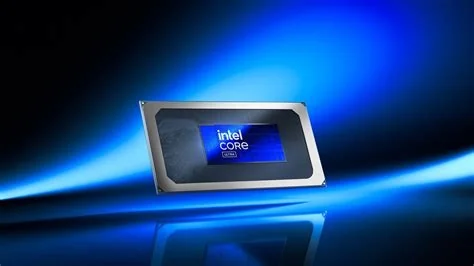
Intel’s Core Ultra Series 3 chips, built on the new 18‑angstrom (18A) process, bring on‑device AI acceleration to mainstream laptops and desktops. The 18A node packs more transistors into the same die area while keeping power draw low, enabling real‑time voice assistants, image search, and translation without draining the battery. You’ll notice faster AI tasks and thinner devices that still feel responsive.
What Is the 18‑Angstrom Process?
The 18A process follows Intel’s 20A node and shrinks the transistor pitch to 18 angstroms. By tightening the geometry, Intel can fit additional logic on each chip and maintain a modest power envelope—an essential trade‑off for AI‑heavy workloads. New packaging technologies also boost inter‑die communication, helping the chips compete with rival advanced back‑end solutions.
AI Engine Built Into Core Ultra Series 3
At the heart of the Series 3 lies a dedicated AI accelerator capable of up to 30 TOPS (trillion operations per second). This engine handles inference tasks locally, so you can run voice assistants, real‑time translation, or image‑based searches without sending data to the cloud. The result is lower latency and better privacy for everyday users.
Performance and Power Efficiency
- Typical AI workloads stay under 25 W, allowing thin‑and‑light designs.
- Latency between CPU cores and the AI engine drops below 100 ns, improving real‑time video upscaling and AR rendering.
- Integrated driver model simplifies firmware updates, speeding time‑to‑market for AI‑enhanced devices.
Impact on the PC Market and Developers
Enterprises seeking on‑premise AI inference and developers craving lower‑latency models both benefit from the on‑device engine. Intel’s open‑source inference libraries already plug into popular frameworks such as PyTorch and TensorFlow, so you won’t need to rewrite large parts of your code to take advantage of the hardware.
Hardware Integration Benefits
Foveros 3D stacking tightly couples the AI accelerator with the CPU cores, cutting data‑travel distance and reducing power spikes. OEMs can keep chassis thickness under 15 mm while still offering AI‑driven features, a sweet spot for ultraportable laptops.
Software Ecosystem Support
OneAPI and OpenVINO provide a unified software stack that abstracts the underlying hardware, letting you focus on model accuracy rather than low‑level optimization. This full‑stack approach positions Intel as a serious contender against AMD’s Ryzen AI and Apple’s M‑series.
Challenges and Competitive Landscape
While Intel’s 18A chips promise strong performance, they must achieve yields comparable to TSMC’s 5 nm and 3 nm processes to stay competitive. Rivals already use advanced back‑end services like chip‑on‑wafer and 3D‑stacking, so Intel needs to prove that its new node can deliver consistent volume production.
Future Outlook for AI‑Ready PCs
If the 18A process maintains steady yields and the AI engine delivers real‑world gains, you’ll likely see a wave of AI‑ready laptops priced for mainstream consumers. Success will be measured not just by benchmark numbers but by how quickly OEMs can ship devices that feel faster, smarter, and more power‑efficient.


