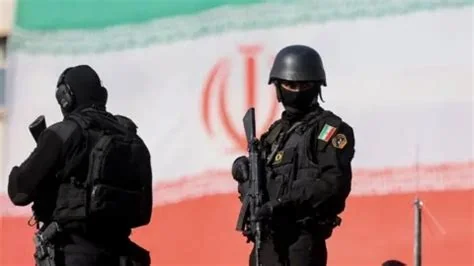
IRGC Targets 18 Tech Giants Including Microsoft, Apple, and Tesla
escalating tensions, the Islamic Revolutionary Guard Corps (IRGC) has officially named 18 American tech companies and one UAE firm as potential targets. The threat is stark: expect the destruction of facilities if the conflict with Israel and the U.S. spills over into infrastructure.
The Target List: A Who’s Who of Global Tech
- Microsoft, Google, Apple, Meta, Oracle, Intel
- HP, IBM, Cisco, Dell, Palantir, Nvidia
- Tesla, Boeing, JP Morgan, G42 (UAE)
While these names sound like a blacklist, reality is far more complex. Hamza Chaudhry, a lead in AI and national security, points out that we can’t think about AI infrastructure as purely a commercial asset anymore. It’s morphing into national security infrastructure, and companies like G42—backed by the UAE’s Mubadala and investors like SilverLake—find themselves at the center of this geopolitical shift.
More Than Just Physical Offices
It’s easy to view these companies as just corporate entities, but the reality is terrifying to consider. We are talking about the servers that power the cloud and the AI models that drive modern intelligence, not just physical offices. The IRGC claims these entities are “key institutions involved in terrorist espionage operations.” The warning was explicit: employees should evacuate areas within a one-kilometer radius of these facilities.
Earlier in March, Iranian hackers—thought to be state-sponsored—breached a medical tech firm, Stryker. Then, on March 3, Iranian drone strikes reportedly knocked out power to Amazon Web Services cloud computing facilities in both the UAE and Bahrain. It’s clear that the physical infrastructure is vulnerable, and you can’t just patch a server when the power goes out.
The Digital Battlefield Shift
As data centers become more critical to the global economy, experts warn that this likely won’t be an isolated attack. We are seeing a shift where the battlefield is no longer just about troops or tanks, but about the servers and the digital networks that hold our world together. For CISOs and IT directors, this changes the threat landscape overnight. If you’re operating in the Middle East, your hardware is now a geopolitical pawn, and securing it means ensuring physical safety, not just digital patches.