Google Quantum AI has drastically lowered the resource estimates for breaking elliptic curve cryptography, proving that quantum computers could crack digital security far sooner than previously believed, potentially using fewer than 10,000 qubits instead of millions.
Why This Changes the Quantum Timeline
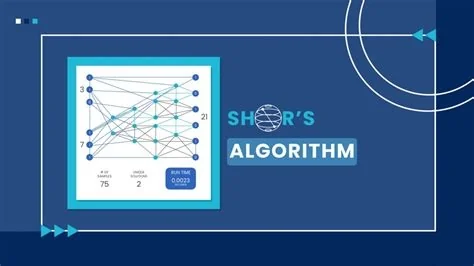
For a long time, the narrative suggested that breaking modern encryption would require massive, futuristic supercomputers. However, a new whitepaper led by Ryan Babbush and Hartmut Neven reveals a different reality. Google researchers constructed two specific quantum circuits implementing Shor’s algorithm, and the results are surprisingly compact. The first circuit requires fewer than 1,200 logical qubits and 90 million Toffoli gates, while the second relies on 70 million gates. This isn’t just academic; they used zero-knowledge proofs to verify the math, ensuring the threat is real, not just a theoretical exercise.
Neutral Atom Tech Offers a New Path
It’s not just about raw power, though. A separate team from Oratomic, Caltech, and UC Berkeley adapted these same algorithms for neutral atom platforms. They found that these systems could implement the attack with just 10,000 reconfigurable qubits. This suggests that the architecture of the quantum computer matters just as much as the hardware itself. If neutral atom tech pans out, the timeline for a practical quantum attack compresses significantly, moving the “apocalypse” for encryption much closer than we thought.
Security Engineers Must Act Now
While the physics community is thrilled by these breakthroughs, you need to pay attention to the warning bells. Google researchers are pushing for a 2029 migration timeline to post-quantum cryptography (PQC). If you are in the industry, you can’t wait for a “silver bullet.” The researchers recommend inventorying every system using ECC immediately, because the encryption protecting your cryptocurrency or corporate data is mathematically vulnerable. We need to embrace post-quantum standards now, or face a future where our digital history is rewritten by quantum machines.