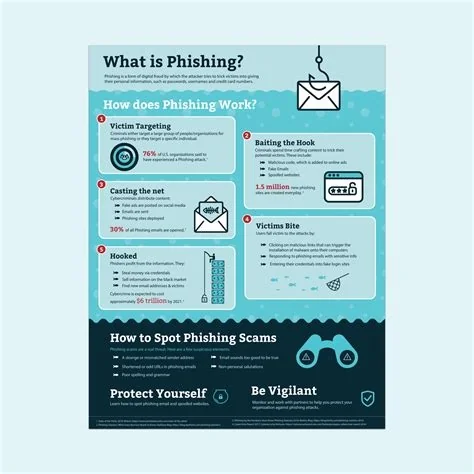
Phishing is a social‑engineering scam where attackers pretend to be trusted entities to steal passwords, credit‑card numbers, or other sensitive data. It spreads mainly through email, SMS, and increasingly through AI‑crafted voice calls that sound like friends or support agents. Understanding its tactics and applying simple defenses can stop most attempts before they compromise you.
How Phishing Works
Fraudsters exploit familiar branding and the fear of losing access. They craft messages that look official, use urgent language, and embed links or attachments that lead to malicious sites. By mimicking legitimate communication, they trick even cautious users into revealing credentials.
Common Phishing Tactics
- Email Phishing – Mass‑mailed messages with malicious links or attachments.
- Spear‑Phishing – Targeted attacks that reference personal details to boost credibility.
- Whaling – High‑level executive scams that promise large payouts.
- Smishing – SMS‑based lures that use shortened URLs or urgent warnings.
- Vishing – Voice calls that employ social engineering, now powered by AI‑generated speech.
All these variants share warning signs: misspelled domains, generic greetings, urgent demands, and requests for passwords or payment info. Legitimate organizations rarely ask for such data via email or text.
Why Phishing Remains Effective
Human psychology is the weakest link. We trust familiar logos, fear being locked out, and respond quickly to perceived emergencies. When a message feels personal and urgent, we often act before thinking. AI tools now let attackers produce hyper‑realistic audio and video, making it even harder to spot the fraud.
How to Defend Against Phishing
- Verify the source: Hover over links, check the sender’s address, and navigate to the official site manually if you’re unsure.
- Enable MFA: Multi‑factor authentication adds a second barrier even if credentials are stolen.
- Stay skeptical of urgency: Pause and consider before clicking on any “immediate action” request.
- Use advanced filters: Modern email gateways employ AI to flag suspicious content, though they’re not infallible.
- Practice regular training: Simulated phishing exercises keep you and your team alert.
Future Trends in Phishing
As AI lowers the cost of creating convincing impersonations, attackers will rely more on deep‑fake audio and video. Voice‑phishing (vishing) will become common, and text‑based scams will incorporate AI‑generated language that mirrors your writing style. Detection tools that focus only on URLs or keywords will struggle, so layered defenses and continuous verification will be essential.
Takeaway
The next time a message looks too perfect, ask yourself if it truly comes from the claimed sender. If you have any doubt, treat it as a phishing attempt. A moment’s caution can protect you from a cascade of security headaches.