
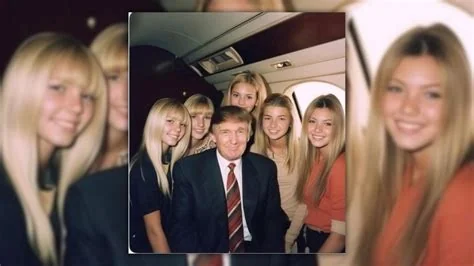
The image circulating online that appears to show former President Donald Trump watching a line of blindfolded girls is not genuine. Fact‑checkers have traced the clip to an AI‑generated video, confirming that it was never part of any Department of Justice release. In short, the photo is a fabricated piece of disinformation.
How the Fake Image Spread Online
Within hours of being posted on social platforms, the visual sparked thousands of shares and comments. Users assumed it was pulled directly from the highly publicized DOJ document dump, and the sensational claim amplified the post’s reach. If you encounter a shocking image, pause before you share—it could be synthetic.
Origin of the AI‑Generated Clip
Investigators discovered the source was a 23‑second video uploaded to Facebook by an anonymous account. The footage combined a computer‑generated likeness of a news anchor with two AI‑crafted segments, one of which featured the fabricated Trump scene. No audio accompanied the anchor’s avatar, a clear sign of synthetic production.
Why the Claim Failed Verification
Three key checks exposed the hoax:
- Provenance search: No official docket or file number matched the image.
- Cross‑reference with public records: Flight logs, email archives, and court exhibits contained no mention of a Trump‑Epstein meeting that resembled the visual.
- Forensic analysis: Specialized tools flagged the picture as 99.9 % AI‑generated, revealing tell‑tale artifacts in the pixels.
Provenance Checks and Forensic Analysis
The absence of a verifiable file number was the first red flag. Authentic DOJ releases are cataloged and searchable, yet this image never appeared in any official index. Forensic software then identified inconsistencies in lighting and edge rendering—classic indicators of deep‑fake technology.
Broader Implications for Tech and Law
The incident highlights two urgent challenges. First, social‑media platforms need integrated AI‑detection systems to stop synthetic media from gaining traction. Second, legal professionals must tighten evidentiary standards; a screenshot alone no longer suffices without a documented chain of custody.
Need for AI Detection Tools
Embedding automated detection into content‑moderation pipelines can flag suspect media before it spreads. As you browse, look for platform warnings that indicate a piece of content has been reviewed by AI‑verification tools.
Evidentiary Standards in the Digital Age
Courts are beginning to require forensic validation of digital evidence. If you plan to rely on an image or video in a legal context, ensure it has been examined by independent experts and linked to an official source.
Practical Tips for Verifying Viral Media
Use this quick checklist whenever you see a sensational claim:
- Check the source: Is the file linked to an official repository?
- Search for the image using reverse‑image tools.
- Look for metadata that includes timestamps, authors, or file IDs.
- Run the media through a reputable AI‑detection service.
- Ask yourself whether the content feels too dramatic to be true.
By applying these steps, you help curb the spread of AI‑fabricated misinformation and protect the integrity of public discourse.


