
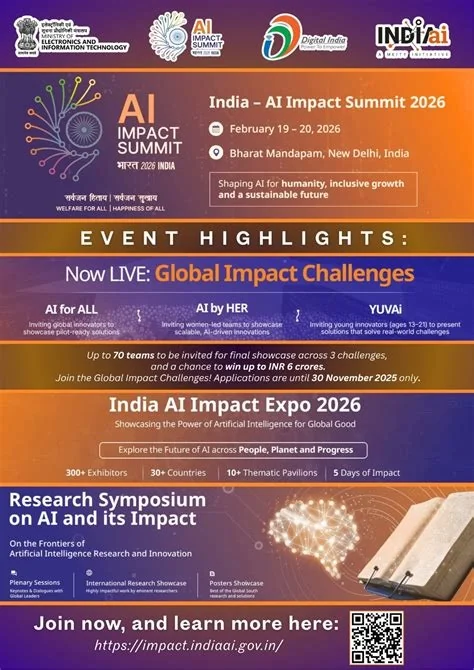
India’s five‑day AI Impact Summit in Delhi turned from a showcase of ambition into a heated political clash, as human‑rights groups slammed state‑run AI projects and a Youth Congress protest disrupted the closing day. The controversy now forces policymakers, tech giants, and you, the observer, to confront how innovation can coexist with accountability.
Government Vision and Summit Highlights
The summit was billed as a platform for sovereign innovation and the “democratisation” of artificial intelligence. Prime Minister Narendra Modi and senior officials presented the event as a launchpad for global AI leadership, highlighting the MANAV policy framework that promises responsible AI development. High‑profile tech leaders, including Sundar Pichai and Sam Altman, joined sessions that announced the “Pax Silica” partnership aimed at strengthening semiconductor supply chains.
Amnesty International’s Human‑Rights Warning
Amnesty International closed the summit with a stark assessment. Its senior director warned that state‑led AI projects are “entrenching state and corporate control” and shrinking civic space at an unprecedented speed. The organization cited research on facial‑recognition and public‑sector automation that threatens privacy, social protection, and fuels discrimination against marginalized groups.
Youth Congress Protest and Political Reaction
On the final day, Youth Congress activists breached security and staged a shirtless protest inside the venue, demanding accountability for AI‑driven surveillance. Police detained ten demonstrators, and the ruling BJP quickly condemned the action as “characterless” and “shameless.” Party leaders framed the protest as an attempt to tarnish India’s image ahead of the summit’s closing declaration.
Impact on AI Policy and Industry
The fallout is reshaping the dialogue around AI governance. Key implications include:
- Policy pressure: Calls for binding guardrails and meaningful public participation are gaining momentum.
- Industry response: Companies like Google and Microsoft must now balance rapid commercialization with heightened demands for transparency.
- International perception: Observers are watching closely to see whether India can uphold its vision while protecting civil liberties.
Expert Insight on Ethics and Governance
Dr. Ananya Rao’s Take
Dr. Ananya Rao, an AI ethics researcher, says the summit exposed both ambition and blind spots in India’s AI strategy. She notes that while partnerships like “Pax Silica” could accelerate hardware development, the lack of enforceable data‑privacy laws and oversight of surveillance tools leaves the risk of institutionalising bias high. Rao adds that the unconventional protest signals growing public impatience with policies that appear to favour industry growth over citizen rights.
What This Means for India’s AI Future
For you, the takeaway is clear: the Delhi AI summit has become a litmus test for balancing innovation with accountability. If policymakers ignore the human‑rights warnings, they risk alienating both domestic constituencies and international partners. Conversely, embracing robust safeguards could position India as a trusted AI hub that attracts investment while protecting its people.


