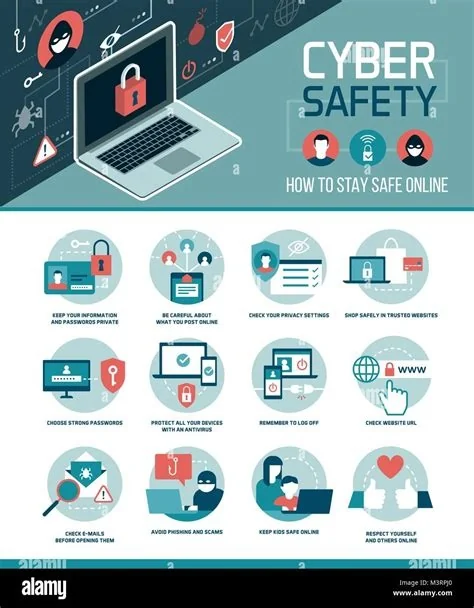
Implementing the right cybersecurity habits and skills is the fastest way to protect yourself, your career, and your small business from today’s relentless attacks. By mastering ten core practices—strong passwords, two‑factor authentication, regular updates, encrypted backups, phishing awareness, secure Wi‑Fi, device hardening, least‑privilege access, vulnerability scans, and incident‑response drills—you create a solid defense that stops threats before they strike.
Core Habits Every User Should Adopt
- Use strong, unique passwords for each account and store them in a reputable password manager.
- Enable two‑factor authentication (2FA) wherever possible to add an extra layer of protection.
- Apply software updates promptly to patch known vulnerabilities.
- Maintain encrypted backups of critical data, both on‑site and in the cloud.
- Stay aware of phishing tactics and verify suspicious emails before clicking links.
- Secure Wi‑Fi networks with strong encryption and hidden SSIDs.
- Hardening devices by disabling unnecessary services and using firewalls.
- Adopt least‑privilege access so users only have the permissions they need.
- Run regular vulnerability scans to identify and remediate weaknesses.
- Practice incident‑response drills to ensure quick, coordinated action during an attack.
Building Practical Cybersecurity Skills
Developing hands‑on expertise turns theory into real protection. Start with free online labs that simulate attacks, then progress to structured learning paths that include industry‑recognized certifications. Pair your study with tools for packet analysis and vulnerability assessment to deepen your understanding.
Hands‑On Labs and Free Resources
- Explore interactive labs that let you practice penetration testing in a safe environment.
- Participate in capture‑the‑flag (CTF) challenges to sharpen problem‑solving skills.
- Leverage community‑driven tutorials that cover common attack vectors.
Certifications That Matter
- Fundamental security certification that validates core knowledge.
- Network‑focused credential that emphasizes secure infrastructure design.
- Advanced practitioner certification for those aiming to lead security teams.
Affordable Security for Small Businesses
Small firms often face the toughest threats, but they don’t need a massive budget to stay safe. Focus on three pillars: data security, staff training, and proactive defense.
- Encrypt customer data both at rest and in transit to prevent unauthorized access.
- Conduct quarterly phishing simulations so employees stay sharp and recognize scams.
- Deploy a layered security stack that includes a firewall, endpoint detection and response (EDR), and a zero‑trust network approach.
- Use cost‑effective tools such as a low‑price password manager per user and trial versions of EDR solutions.
- Leverage free government resources for guidance on best practices and compliance.
Real‑World Impact of Good Habits
Adopting these practices can slash the likelihood of a breach. For individuals, a single compromised account often costs over $1,000 in remediation. For small‑to‑mid‑size businesses, preventing one ransomware incident can save millions in downtime and ransom payments. The return on investment for basic security measures is therefore substantial.
Practitioner Insight
Security analysts report that embedding these habits into onboarding routines makes a dramatic difference. New hires who complete a brief phishing test and set up a password manager before receiving credentials develop a security‑first mindset from day one. Ongoing monthly training sessions keep teams aware of emerging threats and help catch misconfigurations before they’re exploited.
Get Started Today
Ready to lock down your digital life? Begin with one habit right now—enable two‑factor authentication on every account you own. From there, add a strong password manager, keep your software updated, and schedule a quick phishing test for your team. The threats won’t wait, but the roadmap is in your hands.