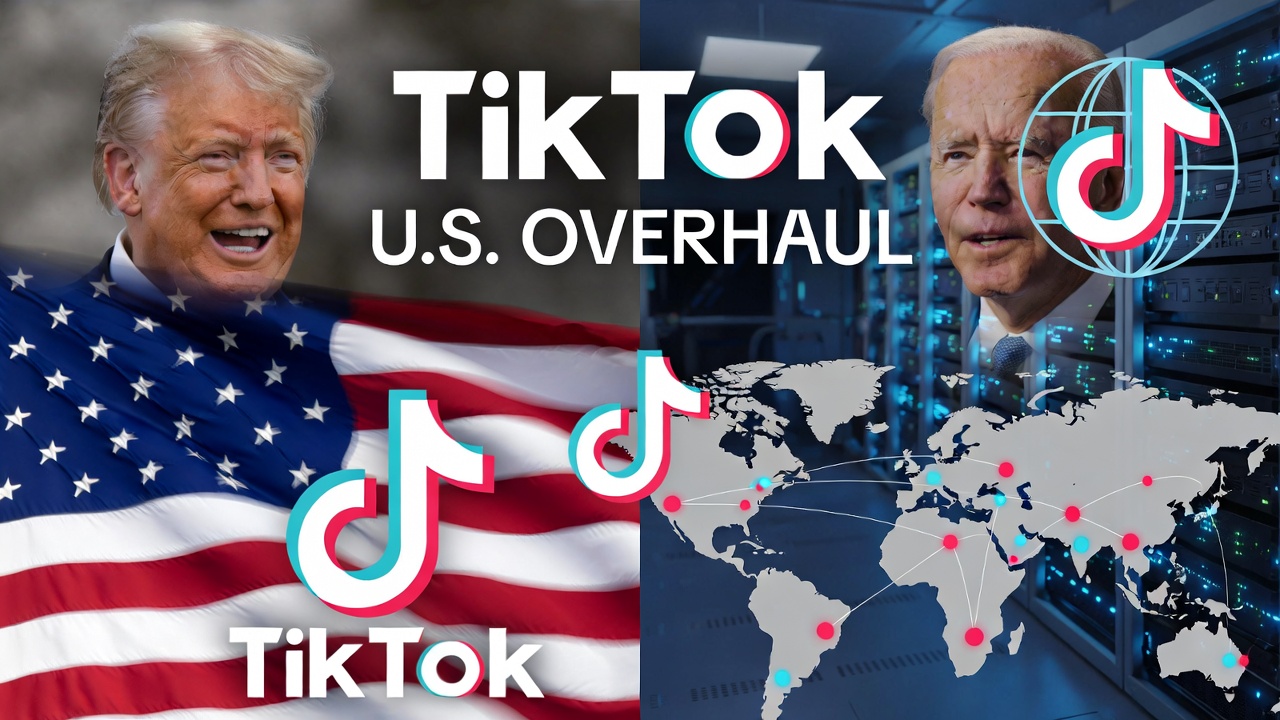
In a landmark move that averted a nationwide ban, TikTok finalized a divestiture deal in early 2026, creating a separate U.S. entity to address longstanding national security concerns.
This agreement, announced on January 22, 2026, marks the culmination of years of tension between the popular short-form video app and U.S. regulators, primarily over fears that its Chinese parent company, ByteDance, could allow Beijing access to American user data or manipulate content algorithms.
While this restructuring profoundly impacts TikTok’s operations and users in the United States, it leaves the app’s global version untouched, ensuring that billions of international users experience no disruptions.The saga began intensifying in 2020 when former President Donald Trump attempted to force a sale of TikTok’s U.S. assets, citing risks of espionage and data privacy breaches. Although that effort stalled, concerns persisted, leading to a bipartisan bill signed by President Joe Biden in April 2024. This legislation mandated ByteDance to divest its controlling stake in TikTok’s U.S. operations within six months or face a complete ban, with deadlines extended multiple times under the subsequent administration.
The law reflected broader U.S.-China tech rivalries, echoing restrictions on apps like Huawei and WeChat.Under the finalized deal, TikTok established TikTok USDS Joint Venture LLC, a new American entity that handles U.S. user data, algorithms, and operations.
ByteDance retains a minority stake of about 19.9%, while majority ownership shifts to a consortium of U.S. and non-Chinese investors, including Oracle (which will oversee data security), MGX (a UAE-based tech investment firm), and Silver Lake.
The U.S. version into a majority American-owned entity (with Oracle and other investors controlling key operations and the algorithm). While the global TikTok continues largely unchanged, the American app now operates in a walled-off bubble. Users report sudden censorship of political content—videos on topics like Jeffrey Epstein, police shootings, immigration protests, or criticism of U.S. foreign policy see drastically reduced reach or fail to upload.This creates a stark propaganda divide: Americans scroll a sanitized, U.S.-aligned feed, while the rest of the world accesses the unfiltered original. Critics call it an information silo, shielding domestic audiences from dissenting views while the globe remains connected to the broader, often more chaotic discourse. The irony is sharp—intended to block Chinese influence, the overhaul risks replacing one form of narrative control with another, trapping U.S. users in an echo chamber of their own making
Critics argue that lingering ties to ByteDance raise unanswered questions about true independence, such as whether core technology remains shared or if Beijing could still exert indirect influence. digiday.com +1 Proponents, including think tanks like the Information Technology and Innovation Foundation, view it as a balanced approach: targeted safeguards that mitigate risks without outright prohibiting foreign tech.
Globally, the deal has minimal ripple effects. Users in countries like New Zealand, Europe, or Asia continue on the standard international version of TikTok, fully operated by ByteDance without any mandated separations.
This means no changes to data storage, algorithms, or app functionality outside the U.S. However, the U.S. precedent could inspire similar actions elsewhere. For instance, India banned TikTok outright in 2020 over border tensions with China, while countries like Albania imposed temporary restrictions in 2025 for youth safety. The European Union has investigated TikTok under its Digital Services Act, but no divestiture has been required. In contrast, nations with closer ties to China, such as those in Southeast Asia, have embraced the app without major interventions.Looking ahead, this divestiture underscores a fragmented digital world, where apps like TikTok must navigate geopolitical divides. It may set a template for handling other Chinese tech giants in the U.S., potentially influencing companies like Shein or Temu. Yet, as questions linger about the deal’s efficacy, it highlights the challenges of balancing innovation, security, and free expression in a globally connected era.
For non-U.S. users, TikTok remains a seamless escape; for Americans, it’s a safeguarded version in an increasingly walled-off internet landscape.