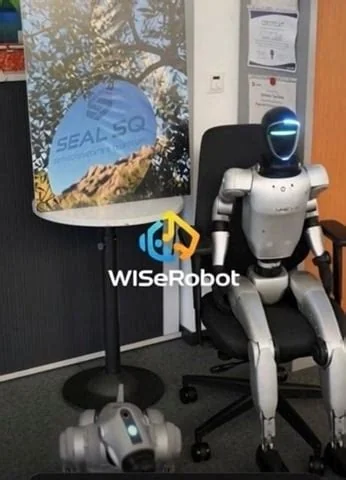
SEALSQ Corp showcases WISeRobot, a post‑quantum secure robotics platform designed to protect physical AI systems with quantum‑resistant cryptography embedded at the silicon, firmware and system levels. The live demo highlights secure digital identity, encrypted communication, and hardware‑anchored trust, demonstrating how autonomous machines can operate safely in a future quantum computing landscape.
Why Post‑Quantum Security Matters for Physical AI
Physical AI—robots, drones, autonomous vehicles and other machines that perceive, decide and act in the real world—faces a threat landscape that traditional cryptography cannot withstand. Quantum computers could break RSA and ECC in seconds, exposing data and control channels. Embedding a unique, unclonable cryptographic identity in hardware ensures trusted boot, authenticated firmware, AI model integrity and secure interactions across humans, infrastructure and machines.
Technical Highlights of WISeRobot
- Post‑Quantum Cryptographic Accelerators: Offload lattice‑based key exchange and signature operations, reducing latency for real‑time control loops.
- Secure Key Storage: Tamper‑resistant enclave protects private keys against physical extraction.
- Lifecycle Management Firmware: Enforces authenticated updates and attests AI model integrity before execution.
During the demonstration, WISeRobot navigated a constrained environment, exchanged encrypted telemetry with a cloud analytics server, and displayed a visual indicator of its cryptographic identity, confirming continuous use of a lattice‑based PQC scheme.
Implications for the AI and Robotics Ecosystem
If widely adopted, SEALSQ’s approach could become a baseline for securing next‑generation autonomous systems in critical infrastructure, defense, logistics and healthcare. Embedding quantum‑resistant roots of trust at the silicon level mitigates the risk of retroactive decryption of recorded data once practical quantum computers emerge, protecting long‑term confidentiality and operational safety.
Challenges Ahead
Broad adoption requires standardization of PQC algorithms, certification of hardware roots of trust, and seamless integration with existing AI development pipelines. Ongoing work by standards bodies will define secure boot, firmware attestation and AI model verification frameworks essential for industry‑wide confidence.
Conclusion
SEALSQ’s live showcase of WISeRobot marks a tangible step toward securing physical AI against the looming quantum threat. By marrying post‑quantum cryptography with hardware‑level trust anchors, the company aims to future‑proof autonomous systems that will increasingly shape the global economy. The robotics and AI sectors will be watching closely as these prototypes evolve into hardened, interoperable solutions demanded by regulators, enterprises and end‑users.