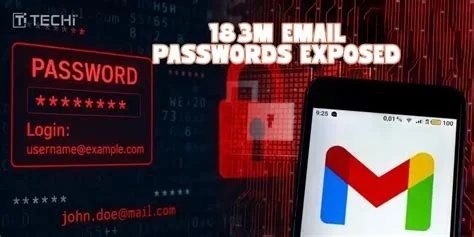
In early 2026 a massive data dump revealed that approximately 48 million Gmail credentials were compromised, placing billions of online services at risk. The leak, part of a 149 million‑record credential database, includes passwords harvested by infostealer malware and is now publicly accessible, prompting urgent security actions for affected users. Users should act now to protect their accounts and prevent further abuse.
What the Leak Contains
The database holds 149 million unique username‑password pairs, with Gmail accounts representing roughly one‑third of the entries. Other compromised services include major social platforms and various online accounts, all collected from infostealer logs harvested over several years.
How the Breach Was Discovered
Security researcher Jeremiah Fowler identified the dump on a hacker marketplace and flagged it as a large‑scale aggregation of credentials harvested by multiple infostealer campaigns. Subsequent analysis confirmed the data is sold through credential‑as‑a‑service operations for phishing, credential‑stuffing, and account‑takeover attacks.
Why Gmail Credentials Matter
Gmail serves as a primary single sign‑on gateway for many users, meaning a compromised Gmail password can unlock linked accounts, enable password resets, and expose personal data across banking, shopping, and social platforms.
Immediate Implications for Users
Experts warn that the leak will likely trigger a surge in credential‑stuffing attacks. Reused passwords amplify the risk, allowing attackers to access multiple services with a single stolen Gmail credential.
Recommended Actions
- Change passwords immediately – Create a strong, unique password for your Gmail account that you haven’t used elsewhere.
- Enable two‑factor authentication – Use Google Authenticator, a hardware security key, or SMS‑based 2FA to add an extra verification step.
- Review account activity – Check Google’s “Recent security events” page for sign‑in attempts from unfamiliar devices or locations.
- Verify exposure – Use reputable breach‑checking services to see if your credentials appear in known leaks.
- Avoid password reuse – Adopt a password manager to generate and store distinct passwords for each service.
Broader Industry Impact
The leak highlights the persistent challenge of defending against credential‑theft malware. While endpoint protection has improved, attackers continue to evolve, targeting less‑secure devices and exploiting zero‑day vulnerabilities. Enterprises should enforce strict password policies, mandate 2FA for all employees, and consider password‑less authentication methods such as FIDO2 security keys.
Looking Ahead
Ongoing analysis will aim to trace the origin of the infostealer logs. In the meantime, Gmail users must treat the breach as a serious warning and take proactive steps to secure their digital identities. Rapid information sharing among security researchers, platform providers, and the public remains essential to mitigate future threats.