48 Million Gmail Credentials Exposed in 149 Million‑Record Leak – What Users and Enterprises Must Do Now
What happened?
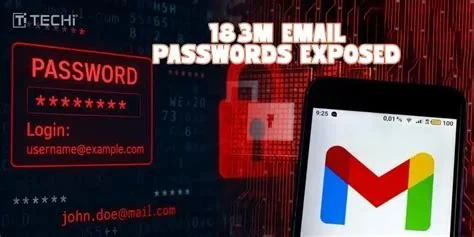
In January 2026 security researchers stumbled upon a publicly accessible cloud bucket that contained a staggering 149 million stolen username‑password pairs. Roughly one‑third of those records – about 48 million – belong to Gmail accounts, making it the largest single segment in the dump.
The data wasn’t the result of a single breach. It was harvested over months, even years, by a family of “infostealer” malware that silently runs on compromised Windows PCs. Once the malware grabs credentials, it uploads them to a storage bucket that was mistakenly left open to the internet. Anyone with the URL could download the entire collection in a matter of minutes.
How the leak was discovered
A researcher scanning for misconfigured cloud storage buckets noticed a folder structure that matched the output of popular infostealer tools. Further digging revealed plain‑text usernames and passwords alongside hashed values for services ranging from email and social media to banking platforms. The researcher reported the find, prompting wider coverage of the incident.
Why Gmail users are at heightened risk
Gmail isn’t just an email service; it’s often the linchpin for password‑reset flows across the web. If an attacker gains access to a Gmail account, they can request password changes for linked services, read private communications, and even infiltrate corporate Google Workspace environments.
Because many people reuse passwords, a single compromised Gmail credential can cascade into dozens of other accounts – from Facebook and Instagram to Netflix and corporate VPNs. The sheer volume of exposed passwords also lowers the barrier for low‑skill cybercriminals, who can now launch automated credential‑stuffing attacks with minimal effort.
Google’s response
Google confirmed it is aware of the dataset and that it includes Gmail credentials. A spokesperson said:
“We continuously monitor for this type of external activity and have automated protections in place that lock accounts and force password resets when we identify exposed credentials.”
The company did not disclose the exact number of affected accounts or whether additional data (recovery phone numbers, security questions) was part of the leak.
Immediate steps for individual users
- Change passwords now. Use a long, unique passphrase for every Gmail account that might be affected.
- Enable two‑factor authentication (2FA). Prefer an authenticator app or a hardware security key over SMS.
- Run Google’s Security Checkup. Review recent activity, revoke suspicious third‑party app access, and set up login alerts.
- Stop reusing passwords. A reputable password manager can generate and store strong, unique credentials for each service.
Recommendations for organizations
Enterprises that rely on Google Workspace need to treat this leak as a wake‑up call. Here’s what security teams should prioritize:
- Enforce MFA across the board. Mandatory 2FA dramatically reduces the chance that stolen passwords lead to a breach.
- Implement password‑policy controls. Require minimum length, complexity, and regular rotation, while discouraging reuse.
- Monitor for credential‑stuffing activity. Deploy rate‑limiting, bot detection, and anomaly‑based login alerts on all critical services.
- Conduct a rapid credential audit. Identify any corporate Gmail accounts that appear in the dump and force immediate password resets.
- Educate employees. Phishing simulations and clear guidance on password hygiene can curb the human factor.
Broader implications for cybersecurity
The incident underscores two persistent threats. First, infostealer malware remains a lucrative, low‑profile operation that silently siphons credentials from millions of devices. Second, the mishandling of stolen data – in this case, leaving a massive dump exposed on a cloud server – creates a secondary risk that amplifies the original breach.
When such datasets become publicly downloadable, the entry barrier for credential‑stuffing attacks drops dramatically. Even attackers with limited technical skill can now automate login attempts against a wide array of services, inflating the overall threat landscape.
Practitioners’ perspective
“What scares me most isn’t the raw number of passwords,” says Maya Patel, senior threat analyst at a Fortune 500 firm. “It’s the fact that these credentials are sitting in a bucket anyone can access. It turns a targeted intrusion into a mass‑scale problem overnight.”
Patel recommends that security teams treat any publicly leaked credential list as a “must‑reset” event, regardless of whether the specific accounts appear in internal logs. “Automate the reset process, push MFA, and then hunt for any signs of abuse. The longer you wait, the more likely attackers have already weaponized the data.”
Looking ahead
While Google’s automated defenses will lock many compromised accounts, the onus remains on users and organizations to adopt stronger authentication practices. Password reuse, once a convenient shortcut, is now a liability that can cascade across the digital ecosystem.
In a world where billions of credentials circulate on the dark web, the safest bet is simple: unique passwords, robust 2FA, and vigilant monitoring. Those steps won’t eliminate risk, but they’ll raise the cost for attackers enough to make many think twice before exploiting a leaked Gmail dump.